SEO Internet Marketing Services: GDM Interactive an internet marketing company
GDM Interactive is an SEO and internet marketing company that can help you increase your website traffic and attract more new business through your website.
Here’s how we help clients like you get more business online…
Developing Compelling Website Content
Successful online marketing starts with the development of strong content that plainly tells your prospective customers what you can do for them. You’ll get more search engine traffic by using the same phrases and words your customer would use… which are not always the same as the words you use. We can help you discover and optimize your pages for these highly effective words and phrases.
Search Engine Optimization – SEO
Top search engine rankings are key to your business, and we have the SEO tools to help get you there. Our SEO Sarasota research and planning acquires the information needed to properly optimize search engine optimization for your business helping to increase your positioning in search engines. We concentrate on vital parts that help get pages ranked. That includes page titles, main page headings, Meta keywords, link text, alternate text for images and more.
Keyword Research
Discovering the keywords and phrases your potential customers are using to search online is the fundamental building block for attracting traffic from search engines. We’ll perform extensive research into your market… and find the not only the right keywords… but the keywords your customers are actually using. Then we’ll use these results to develop content-rich web pages for your website that will attract traffic and new customers to your site.
Linking Strategies
Links to your pages are essential to your success in attracting more online traffic to your web pages. Where these links are placed and how they are written tells the major search engines as much about who and what you are as the actual pages themselves. We’ll develop and execute an online linking strategy that gets your pages to show up prominently in search engines like Google, Yahoo, and Bing… And bring targeted qualified traffic to your web site.
Email Marketing
Email marketing is the ideal way to follow up with customers who have found your website and established contact with you. We’ll help you create email communications and promotions that bring your visitors back for more, increase your share of mind, and increase your sales.
Paid Search Engine Marketing
Search engine marketing and Search Engine Optimization – SEO is a highly competitive arena that can cost you a lot of money very quickly. We’ll n help you avoid the expensive learning curve of paid search engine marketing. You’ll get cost-effective paid search campaigns that will meet your objectives for profitability and efficiency.
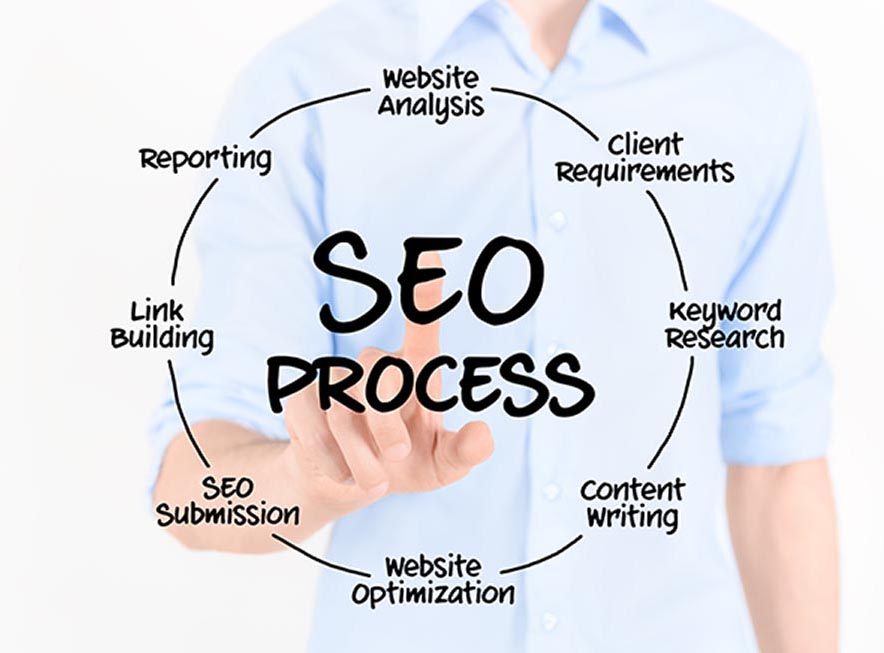
Why Do E-commerce Websites Need SEO?
Search engine optimization is important not just for websites, but e-commerce websites as well. In fact, you could say it’s crucial for e-commerce websites. Why is that? Well, when e-commerce customers search, for the most part, they are ready to buy, not just out surfing for the fun of it. These customers are ready to purchase with their hard-earned money, and if you aren’t utilizing SEO then they could miss you and go to that other site that is. This is why it is so important to utilize SEO, it makes your store visible to customers thus helping to boost your profits.
Think about this with SEO, it’s basically like placing a large banner on the front of your brick-and-mortar store announcing “we carry kitchen utensils!” or “we have sports memorabilia!” If your website isn’t optimized for such key phrases when a buyer searches, then your chance of showing up greatly decreases. You likely have a large inventory of products, which means you have a large number of products to optimize your site for, along with plenty of targets for keyword variations.
With general advertising you’re doing just that, taking a general way to get people to your site. When trying to build and grow a business this isn’t enough, you need to make the sale. Online sales happen for a reason, that consumer is looking for an exact product or service to meet their need. When you optimize your e-commerce site you then greatly increase your likeliness of appearing in their search results, in turn bringing that targeted traffic back to your site.
SARASOTA
Contact us to find out more about how we can help you increase your website traffic and attract more new business through your site.